ICD booklet
Read or download our guide to implantable cardioverter defibrillators (ICDs)
Find out more


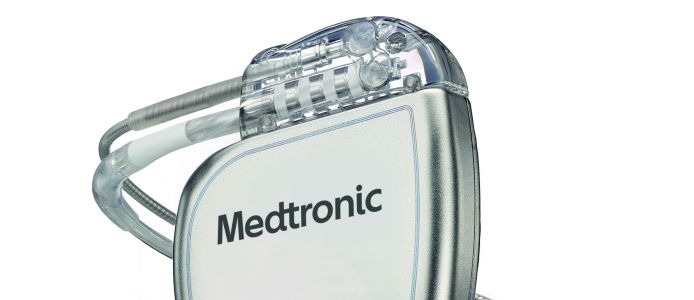
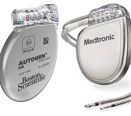
ICDs, or implantable cardioverter defibrillators, monitor the heart rhythm and respond to abnormal heart rhythms. When dangerous abnormal rhythms are detected an ICD works to restore the normal rhythm of the heart.
The heart normally beats in what is known as ‘sinus rhythm’, which is controlled by regular electrical signals that travel through the heart. These signals make the chambers of the heart beat in sequence,
which causes the blood to flow through the heart and to the lungs or to the body. The speed of the heart beat will depend on what the person is doing, and how much energy the body needs. For example, the heart beats more slowly when someone is sitting down quietly reading a book, and faster if they are walking quickly.
Arrhythmias (abnormal heart rhythms) happen when the electrical signals that control the heart beat are disrupted in some way, and the heart beats in an abnormal rhythm. There are many types of
arrhythmias, some affect the atria (top chambers of the heart) and some affect the ventricles (bottom chambers of the heart). Some make the heart beat faster (tachycardia), some make it beat slower
(bradycardia), and some cause the heart to beat erratically (fibrillation). Arrhythmias are often treated with medication (anti-arrhythmic drugs). However, some arrhythmias can be life-threatening (see below).
ICDs are devices that constantly monitor the heart’s rhythm, and detect and monitor any arrhythmias in the ventricles. Depending on the type of arrhythmia, the ICD will treat this.
Ventricular tachycardia (VT) is a type of arrhythmia that causes the ventricles to beat too quickly. This is caused by abnormal electrical activity within the ventricles which causes over 100 beats per minute,out of synchrony with the atria. This means that the ventricle doesn’t have time to fill properly so blood cannot be pumped around the body effectively. Although VT can be brief and not cause any
problems, when it is more prolonged it can cause dizziness and light-headedness, and sometimes collapse. In extreme cases, VT can cause the heart’s function to be so reduced that emergency
resuscitation is needed.
If the ICD detects a too-fast rhythm it will monitor this. If the heart doesn’t go back into sinus rhythm it will ‘pace’ the heart (take over the electrical signals controlling the heart rate) by giving fast electrical
impulses to interrupt the arrhythmia. This is called anti-tachycardia pacing or ‘ATP’. If pacing the heart doesn’t restore a normal rhythm, and the heart is in VT, the ICD will send a small electrical shock (or
shocks) to the heart (called ‘cardioversion’) to try stop the arrhythmia and ‘convert’ the heart back into sinus rhythm.
Ventricular fibrillation (VF) is caused by series of abnormal impulses, coming from many parts of ventricle walls, that interrupt the electrical signalling in the heart. This causes the ventricles of the
heart to contract in an uncoordinated way, and ‘quiver’ (or ‘fibrillate’) rather than contract normally. This means that the heart can’t pump blood out of the ventricles (called the ‘heart’s output’). Ultimately, VF can be a cause of cardiac arrest (when the output of the heart stops suddenly and the person collapses), which can be fatal.
If an ICD detects VF, it gives an electrical shock to the heart to interrupt the abnormal rhythm (literally ‘de-fibrillating’ or stopping the fibrillation) and restore sinus rhythm. This prevents VF leading to a cardiac arrest.
An ICD can only work if there is electrical activity in the heart. If the heart output has stopped and there is no electrical activity (called ‘asystole’) an ICD will not fire to ‘restart’ the heart. Emergency
resuscitation would be needed (giving chest compressions) until medical help arrives to administer drugs to the heart.
Note: ICDs can help to ‘pace’ a heart if it is beating too slowly (like a normal pacemaker). This is called anti-bradycardia pacing or ‘ABP’.
ICDs are used for people who have experienced abnormal or dangerous arrhythmias (for example that have caused them to lose consciousness or led to a cardiac arrest). They are also used for people who are considered to be at risk of having abnormal or dangerous arrhythmias (where they are used prophylactically or on an ‘in case’ basis). This may be the case for people with various types of cardiomyopathy, depending on how their condition affects them.
For people with hypertrophic cardiomyopathy (HCM, where areas of the heart muscle is thickened) there are guidelines from the European Society of Cardiology (ESC) available to help doctors decide
for whom a device is appropriate. The guidelines help to predict the risk of a life-threatening arrhythmia that could lead to a cardiac arrest and sudden cardiac death. Several risk factors are considered, which include the following:
This information is used to determine an individual’s risk of a life-threatening arrhythmia and therefore whether a device is recommended. Although there are no ESC guidelines to decide about ICDs for people with other types of cardiomyopathy, each person’s condition and symptoms will be reviewed so that any recommendations are appropriate for them.
NICE – the National Institute for Health and Care Excellence (opens new window) – is an independent organisation that gives recommendations on health and social care in England. It produces guidelines on how conditions should be treated and managed, which are developed using evidence-based research. NICE has guidance on the use of ICDs and CRT (a type of pacemaker) for arrhythmia and heart failure (called ‘TA314’) and S-ICDs for preventing sudden cardiac death (called ‘IPG454’). You can go on the NICE website at www.nice.org.uk and search for ‘TA314’ or ‘IPG454’ for more information.
Read or download our guide to implantable cardioverter defibrillators (ICDs)
Find out more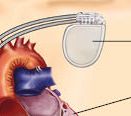

Read more about the importance of your ICD identification card.
Read more here




Image at top of page reproduced with permission of Medtronic, Inc.
©Cardiomyopathy UK. April 2018